
The value of AI pair programming is hard to argue with, considering how it allows teams to write code faster and reduce repetitive work. Most developers who’ve tried it would probably agree that it delivers on that promise. The problem is that even though the productivity gains are great, so are the security risks.
AI-generated code introduces vulnerabilities in 45% of cases, and over-reliance can diminish the foundational skills developers need to catch those flaws. It’s not a reason to stop using these tools, but it does make it necessary for developers to have security training to recognize and reduce these risks.
What is AI Pair Programming?
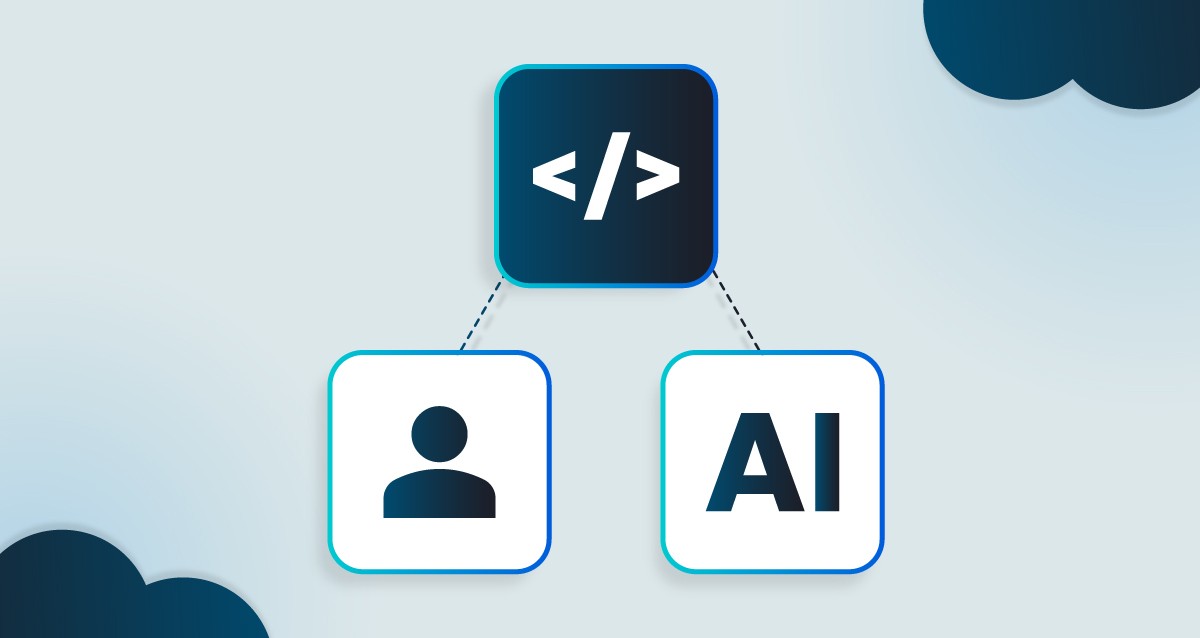
AI pair programming uses large language models as virtual coding partners that provide real-time code suggestions, debugging help, and refactoring recommendations directly inside a developer’s IDE.
Tools like GitHub Copilot, Cursor, and Claude can suggest entire functions, explain unfamiliar syntax, help debug complex issues, and generate boilerplate code from a plain-language description.
Whereas traditional pair programming involves two developers sharing a keyboard, taking turns writing and reviewing code, AI pair programming lets developers write code or describe what they want, and the AI responds with suggestions, completions, or explanations.
However, AI doesn’t have the contextual reasoning that comes from understanding team conventions, application security requirements, and the business logic behind a feature.
How AI Pair Programming Tools Work
So how do these tools generate such useful suggestions? It basically comes down to three central capabilities working together.
Codebase Mapping
AI assistants such as Cursor and GitHub Copilot can scan a repository to understand file relationships, naming conventions, and existing patterns. It’s this context that helps create the suggestions they generate. However, that also means sensitive code, credentials, or proprietary logic can influence model behavior in more subtle ways.
Contextual Analysis
The AI reads surrounding code, for example, imports, variable names, comments, and recent changes, to infer what a developer is trying to accomplish. The more context it has, the more relevant its suggestions. This also means the quality of AI output inherits the weaknesses of your existing codebase.
Suggestion Generation
Developers write a comment or start typing, and the AI translates that intent into executable code by drawing on training data from millions of code repositories. That training data includes both secure and insecure examples, and the model has no way to distinguish between them without guidance.
Developers should give specific, structured instructions rather than vague requests to produce better results. This prompt-driven approach shares similarities with vibe coding, where security-conscious prompting becomes especially important.
Benefits of Pair Programming with AI
Before addressing the risks, it’s worth clarifying why these tools are so popular. The productivity gains are evident and well-documented.
Accelerated Code Development
AI pair programming can greatly reduce the time spent on routine coding tasks. Instead of having to code from scratch, developers can describe what they want, and the AI generates a working implementation in seconds.
This speed boost is most noticeable for tasks that developers have done many times before, such as writing a database query or setting up a new component. The AI handles the mechanical work while developers can focus on the logic that’s important to their application.
Reduced Boilerplate and Repetitive Tasks
Every codebase has repetitive patterns, such as error handling and data validation, that follow predictable structures that AI pair programmers recognize and generate consistently.
Developers might write a comment to create a function that validates email format and watch the AI produce exactly what they expected. It doesn’t replace developer skills, but it eliminates the tedious parts of using them so they can spend more time on complex problems.
On-demand Learning and Skill Development
Working with an AI pair programmer can also speed up learning when developers face something unfamiliar, with enterprise data showing that onboarding time is cut from 91 to 49 days with daily AI usage. If developers have to learn a new framework, they can ask the AI to generate examples and explain syntax for that language or library.
It works best when AI suggestions are seen as learning material rather than copy-paste solutions. Understanding why the AI suggested a particular approach builds lasting knowledge that transfers to future projects, which is also where security training comes in.
Enhanced Debugging and Problem-Solving
When stuck on a bug, all developers need to do is describe the problem to an AI, which often helps them think through it more clearly.
The AI might find an obvious issue that’s been overlooked after staring at the same code for hours, or it might suggest a completely different approach to resolve the problem.
Challenges and Risks of AI Pair Programming
It’s true that AI pair programming offers productivity benefits, but it introduces risks that teams often underestimate. Here’s what to watch for.
Security Vulnerabilities in AI-Generated Code
AI-generated code frequently contains security flaws because the AI doesn’t understand the team’s threat model, and its training data includes plenty of insecure examples alongside secure ones.
These issues might include hardcoded credentials, SQL injection vulnerabilities, improper input validation, and insecure cryptographic practices. Saying that, AI is more likely to pick up on these common issues, rather than hidden ones that are based on context.
-
Insecure patterns: AI might suggest code that works but uses deprecated functions, weak encryption, or unsafe data handling.
-
Missing validation: Generated code often doesn’t do input sanitization or boundary checks that prevent common attacks.
To mitigate this risk, developers should review all AI-generated code for OWASP Top 10 vulnerabilities before committing, with the same level of attention they would apply to code from an unfamiliar contributor.
Code Quality and Accuracy Concerns
AI can produce code that runs, but it’s not always optimal. For example, it might provide a solution that needs a lot of processing power and doesn’t scale well. Essentially, the AI optimizes for what looks correct rather than what properly fits the architecture or is secure.
As a reminder, AI suggestions are based on patterns in training data, which might not represent best practices or the most effective methods for a specific situation.
It’s a good idea to do secure code reviews of AI-generated code to find issues.
Over-reliance and Skill Degradation
There’s a risk that excessive reliance on AI will weaken programming skills in the long run. If developers always let the AI handle error handling or data validation, they might struggle when they need to debug those systems or work without AI assistance.
When developers don’t fully understand the code in their codebase, it can be difficult to modify it later. It makes the codebase harder to maintain and extend with new features.
AI should always be used as an assistant, not a replacement for understanding. Developers still need to periodically write code without AI help to maintain foundational skills, including security, and always review AI-generated code rather than accepting it as-is.
Intellectual Property and Licensing Issues
The code repositories that AI models use to train also include open-source projects with various licenses. If the code is open source, it doesn’t mean that it can be used freely without limits. For instance, AI might suggest code that looks a lot like copyrighted material or violates license terms, which then exposes your organization to legal liability.
-
Risk of infringing code: Developers may unknowingly include copyrighted code in their projects, leading to legal issues if a product ships with it.
-
Lack of license awareness: AI models don’t usually provide context on the licensing requirements of the code they generate.
It’s best to verify licensing compliance for any substantial AI-generated code. Some organizations use tools that automatically check for license conflicts before code is committed to the repository.
Context Limitations and Hallucinations
AI pair programmers sometimes “hallucinate” and generate confident-sounding code that references non-existent APIs, uses deprecated methods, or simply doesn’t work. This happens more often with complex business logic, less common frameworks, or when the AI’s training data is outdated.
Developers should test AI suggestions thoroughly and not assume that syntactically correct code is functionally correct or secure, especially for edge cases or security-sensitive operations.
Best Practices for Secure AI Pair Programming
1. Review all AI-Generated Code Before Committing
Every line of AI-generated code needs human review, given that AI-generated pull requests contain roughly 1.7× more issues than human-written code. Working in Git branches to isolate AI changes makes it easier to test, review, and roll back if something goes wrong. It’s important to maintain the same quality standards that apply to any code entering the codebase.
2. Validate AI Suggestions for Security Flaws
Before accepting AI-generated code, check for common vulnerabilities, such as injection flaws, authentication issues, sensitive data exposure, and insecure defaults.
However, the most significant vulnerabilities aren’t always the obvious ones. AI tools have improved at avoiding classic, common flaws. The real risk is subtler and includes business logic errors, broken access control, and context-dependent flaws that require an understanding of your specific application and threat model.
The AI doesn’t know an organization’s security requirements, so this validation step catches problems before they reach production.
3. Maintain Strong Foundational Secure Coding Skills
When it comes to effective AI pair programming, developers need to be able to evaluate and correct AI output. Teams with strong, secure coding fundamentals catch AI mistakes faster and produce more secure applications overall.
Developers should receive hands-on training to build these foundational skills. When developers understand and practice secure coding, they are better able to see when AI suggestions aren’t unsafe.
4. Use AI as an Assistant, Not a Replacement
Frame AI as a tool that enhances developer skills rather than substitutes for them. Developers are still responsible for understanding what the code does, why it’s structured the way it is, and whether it meets requirements. Even though the AI generates options, it’s still the developer who should make the decisions.
5. Establish Team Guidelines for AI Tool Usage
Organizations that have clear policies about when and how to use AI coding assistants benefit the most, ideally as part of a wider application security program. This means defining which AI-generated code needs security review, which use cases are off-limits, and how AI-assisted work should be tracked and documented.
How Secure Coding Training Enhances AI Pair Programming
When developers have secure coding skills, they get more value from AI pair programming as they understand its limitations. They recognize when AI introduces vulnerabilities, can make informed decisions about which suggestions to accept, and maintain code quality even when working at AI-assisted speed.
SecureFlag gives development teams hands-on secure coding training in real development environments, not only passive video content, but practical exercises in the same languages and frameworks teams use every day. Developers build practical skills to assess AI output critically, rather than just accept it.
For teams that want to go further, SecureFlag’s AI-Assisted Development Labs is the next step. Rather than just applying secure coding knowledge to AI output, developers learn how to work directly with AI coding assistants, prompting them securely, reviewing what they produce, and fixing what they get wrong.
For security leaders and developers alike, it means AI adoption doesn’t have to come at the cost of increased exposure. Teams that combine AI productivity with strong security basics deploy faster and more securely.
Want to see how to get the most out of AI pair programming without the risk?