
COBOL has been around for over six decades (yes, really) and is still running many critical systems. That longevity is impressive, for sure, but it also means security needs a closer look as these systems interact with today’s technology.
SecureFlag has introduced a series of new hands-on COBOL labs designed to help developers identify and mitigate vulnerabilities, keeping these legacy systems running safely.
Why COBOL Security Is Still Important
COBOL is often used on mainframes and processes vast amounts of data and transactions simultaneously. For example, it runs on IBM mainframes with the z/OS operating system, which continues to support critical financial and government systems.
For decades, COBOL has proven reliable; however, these systems were also built long before modern security practices existed.
As legacy COBOL systems often work in the background, they can remain untouched for years. Over time, updates and integrations have introduced new security risks through APIs, mobile applications, and even cloud services.
While the code may still function well, outdated configurations and overlooked vulnerabilities can expose organizations to risks. Learning to review, analyze, and securely fix COBOL code is an increasingly valuable skill.
COBOL Vulnerabilities
COBOL isn’t inherently insecure, but older systems and certain coding practices can expose it to problems. Some of the things to watch out for include:
-
Authentication Bypass: When the system grants access without properly verifying the user.
-
Authorization Issues: Users may gain access to resources or actions they shouldn’t.
-
Weak Input Validation: Accepting unexpected or unsafe data.
-
Outdated Cryptography: Use of insecure or obsolete encryption methods.
-
SQL Injection: Unsafe handling of database queries.
-
OS Command Injection: Executing system commands using unvalidated input.
These issues might sound familiar, but they take on added weight when they occur in critical systems that process financial transactions or government records.
Without enough skilled COBOL professionals to maintain or audit the code, these problems can go unnoticed. Organizations need effective ways to identify and mitigate these risks, and hands-on training is the best way to go about that.
About the New COBOL Labs
To help organizations enhance their COBOL security capabilities, SecureFlag has introduced a set of new labs dedicated to COBOL application security.
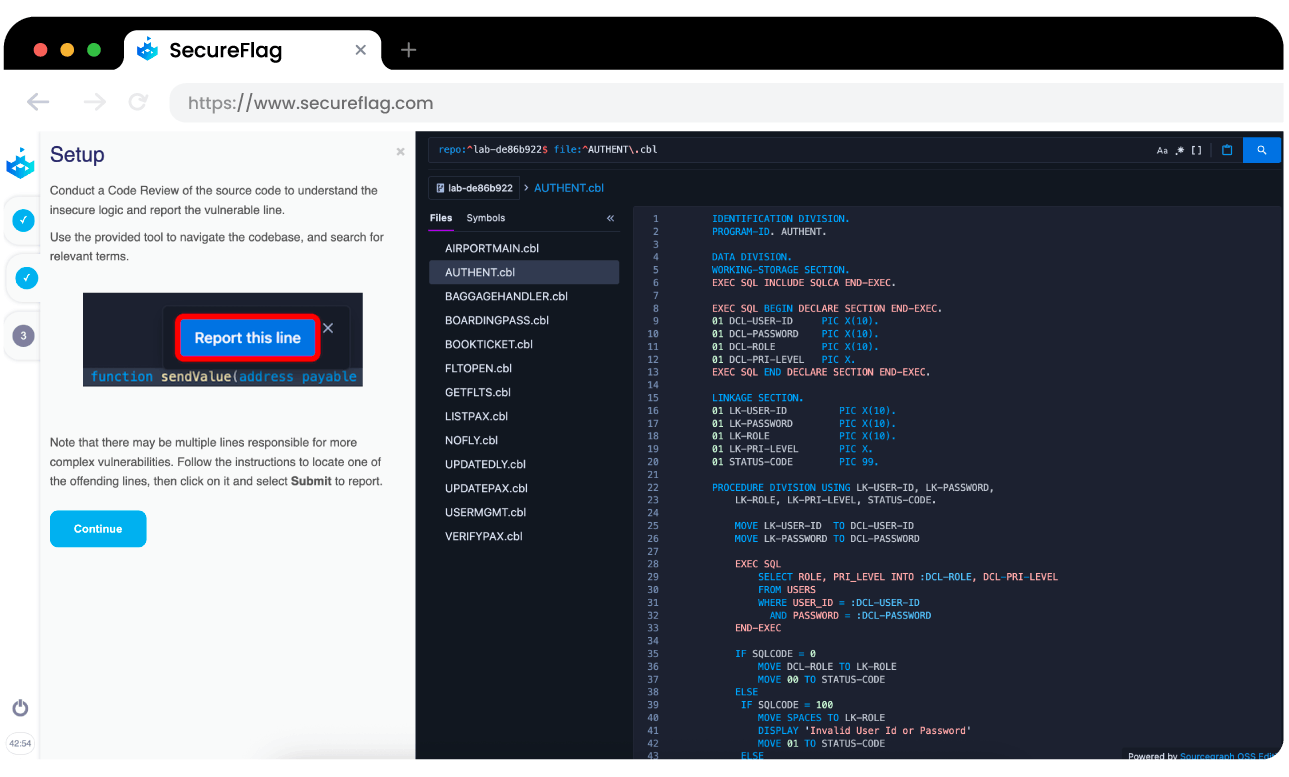
These labs simulate real vulnerabilities in COBOL applications in an engaging, interactive environment. They guide learners through identifying the issue, understanding its impact, and applying secure coding principles to resolve it.
For example, in one lab, you might investigate authentication logic that still gives access after a failed login. In another, you need to explore how a rogue server received sensitive tokens via Server-Side Request Forgery (SSRF). Other scenarios include incomplete logs that hide inconsistencies or subtle buffer-handling issues that cause critical processes to crash.
Each scenario combines investigation with practical problem-solving, helping learners think through what went wrong and how to prevent it next time.
How SecureFlag Helps Build Safer Software
SecureFlag helps organizations develop safer software, no matter the language or platform.
Our thousands of interactive labs cover everything from more modern languages like Rust and Python to foundational systems written in COBOL, ensuring teams can develop secure coding expertise across their entire technology stack.