
A few years ago, attackers took an average of around 32 days to exploit a newly disclosed vulnerability. That window has since been greatly reduced, with many vulnerabilities now exploited within days or even hours of disclosure.
Meanwhile, AI is pushing both attackers and defenders to move faster. Attackers are using it to find and weaponize vulnerabilities, while defenders are under pressure to respond at machine speed.
As a result, each stage of the vulnerability management lifecycle is being redefined, exposing the limits of processes that were designed for a slower-moving environment.
What Is the Vulnerability Management Lifecycle?
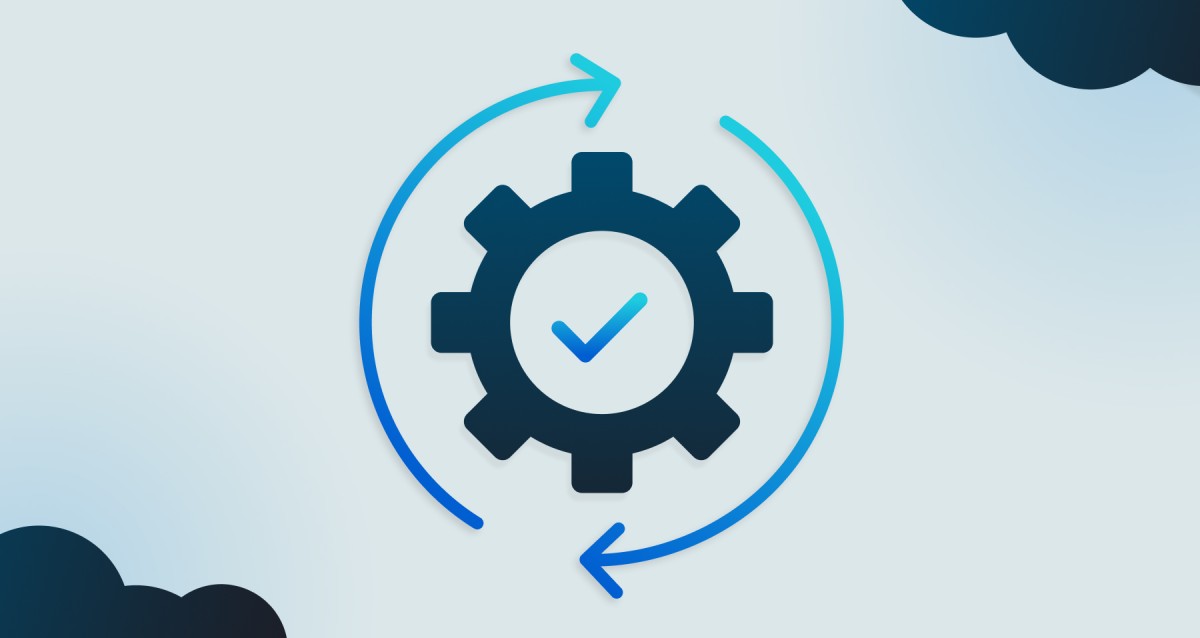
The vulnerability management lifecycle is a continuous, five-stage process that organizations repeat to stay ahead of security weaknesses. It runs in an ongoing loop because new vulnerabilities emerge daily.
Essentially, this lifecycle is a way to systematically manage security issues across entire IT environments. Teams discover assets, scan for vulnerabilities, rank them by risk, fix what’s important, confirm the fixes worked, and then start again.
With a record 48,185 CVEs published in 2025, the speed of vulnerability disclosure has overwhelmed traditional management approaches. By the time teams finish triaging last week’s scan results, the attack surface has already changed.
Organizations that still approach vulnerability management as a quarterly project often leave critical exposures undetected between scans.
A few related terms often get mixed up, so to clarify:
-
Vulnerability lifecycle: The stages a security issue goes through, from discovery to remediation and verification.
-
Vulnerability management process: How organizations systematically find, rank, and fix vulnerabilities across their entire environment.
-
Vulnerability management cycle: The ongoing loop of finding, fixing, and checking vulnerabilities as systems keep changing.
Why Is Vulnerability Management Important for Application Security Teams?
Unpatched vulnerabilities remain one of the most common entry points for attackers. According to Verizon’s 2025 Data Breach Investigations Report, exploitation of vulnerabilities remains a primary means of gaining initial access, with system intrusions increasingly targeting known weaknesses that organizations failed to patch in time.
The consequences aren’t limited to security incidents, and can include failed audits, compliance penalties, and reputational damage when vulnerability management breaks down. For application security teams, there’s also the hidden cost of security rework, as developers are taken away from new features to fix issues that could have been prevented earlier.
Traditional reactive approaches, where teams scan periodically and rush to patch, cannot keep up. The challenge is reducing the number of vulnerabilities introduced from the start, which can be addressed through secure coding training.
The Five Stages of the Vulnerability Management Lifecycle
While some frameworks describe six stages, the main vulnerability management workflow is generally simplified into five repeatable steps. Each stage builds on the last, so there’s a continuous loop rather than a linear process.
Stage 1: Asset Discovery and Identification
This first stage is to create and maintain an accurate inventory of all assets. It should include hardware, software, cloud workloads, containers, APIs, and third-party integrations.
Shadow IT is a particular risk here. For example, there might be vulnerabilities in forgotten test servers and undocumented cloud instances that don’t appear on official asset lists.
AI adoption has made this worse, as developers using AI coding tools or APIs on personal accounts create shadow infrastructure that sits entirely outside security team visibility.
Asset discovery usually includes:
-
Hardware and software inventory across on-premises and cloud environments.
-
Containers and ephemeral workloads that spin up and down rapidly.
-
APIs and third-party integrations that connect to external services.
-
Development, staging, and production environments.
Stage 2: Vulnerability Assessment and Scanning
After the assets have been inventoried, the next step is identifying weaknesses. Automated scanners compare assets against known vulnerability databases, such as the National Vulnerability Database (NVD) and CVE records, generating raw findings for the team to evaluate.
There are various assessment methods to catch different types of issues:
-
Automated scanning: Network, application, and infrastructure scanners that run continuously or on schedule.
-
Static analysis (SAST): Reviewing source code for security flaws before deployment.
-
Dynamic analysis (DAST): Testing running applications for exploitable weaknesses in real time.
Scanning is not enough on its own, though. It’s still important to perform manual penetration testing and code review, especially to detect logic flaws that automated tools miss.
It reinforces the need for developers to build the skills to recognize and fix these issues, and to reduce the number of vulnerabilities introduced from the beginning.
Stage 3: Risk-Based Prioritization
Vulnerabilities have different levels of risk depending on context. For example, a critical flaw in an isolated internal system can be less urgent than a medium-severity weakness on a public-facing payment application.
To prevent teams from getting too many alerts, it’s important to prioritize risks. Instead of focusing only on a high CVSS score, security teams evaluate vulnerabilities based on multiple factors:
-
Severity score: CVSS or similar rating from the vulnerability database.
-
Exploitability: Is there a known exploit in the wild? Is it being actively used?
-
Asset value: What is the business impact if this system is compromised?
-
Exposure: Is the asset internet-facing, or somewhere deep in an internal network?
If organizations don’t do this step, they may find their teams get overwhelmed from patching low-risk issues while critical exposures remain open.
Stage 4: Remediation and Response
Remediation is the stage where vulnerabilities get fixed. There needs to be clearly defined ownership, timelines, and direct engagement from development teams, not just security.
When it comes to remediation, there are various options (depending on the vulnerability and context):
-
Patching: Applying vendor fixes to address known issues.
-
Code remediation: Developers fixing vulnerabilities directly in the application code.
-
Configuration hardening: Adjusting settings to reduce exposure without changing the code.
-
Compensating controls: Putting safeguards in place when an immediate fix isn’t possible.
-
Risk acceptance: Documenting and formally accepting certain risks when needed.
The biggest bottleneck here is often coordination because security teams identify issues, but developers own the code. Hands-on training helps developers remediate issues more accurately and independently by giving them the security context they need.
Stage 5: Verification and Continuous Monitoring
This final stage is where rescanning is done to check that remediation worked and that no new issues were introduced during the process.
Verification also plays a role in reporting and audit readiness. Metrics such as mean time to remediate, vulnerability backlog trends, and asset coverage help show how well the program is working.
From here, the cycle restarts. Continuous monitoring ensures that new vulnerabilities are caught quickly, rather than waiting for the next scheduled scan.
How Is AI Transforming Each Stage of Vulnerability Management?
AI is fundamentally changing how organizations approach vulnerability management. Traditional timelines were made for human-speed discovery and response, but machine learning and large language models are accelerating discovery and response for defenders and attackers alike.
AI-Powered Vulnerability Discovery
AI models can analyze codebases and systems at scale, finding weaknesses faster than manual review ever could.
Anthropic’s Project Glasswing demonstrated this. Using Claude Mythos Preview, the initiative identified thousands of critical zero-day vulnerabilities across major operating systems and widely used open-source software, including flaws that had gone undetected for decades despite millions of automated tests.
However, the same capability is also available to attackers. Offensive AI can scan for exploitable weaknesses at the same scale and speed, which is part of why the exploitation window has become so much shorter.
Automated Prioritization and Triage
Machine learning analyzes multiple factors, including active threats, system importance, and the presence of exploits, to rank vulnerabilities more accurately than relying solely on CVSS scores.
This can help reduce alert fatigue and improve focus, particularly in large environments where teams are dealing with thousands of findings.
The limitation is that AI models trained on historical data can miss new attack patterns. Emerging threats that don’t match known signatures can still get through an otherwise well-tuned triage system.
Intelligent Remediation Guidance
AI can also speed up the remediation phase by suggesting specific fixes, generating code snippets, and guiding developers toward remediation paths. It’s valuable when developers don’t have much security expertise, as AI can help provide the security knowledge they need during coding.
That said, remediation suggestions still need validation. AI-generated fixes can be incomplete, too generic, or introduce new issues if applied without review. Human oversight is still essential to make sure the fix aligns with the application’s security context.
As development becomes increasingly AI-assisted, the ability to review and correct AI-generated code is becoming an essential developer skill.
AI-Driven Continuous Monitoring
Traditional monitoring relies on scheduled scans, which means changes between cycles can create windows of undetected exposure. AI-assisted monitoring helps with this by analyzing environment changes, new assets, and threat intelligence more continuously.
It’s important in dynamic environments where containers spin up and down, APIs connect to new services, and the attack surface changes more often. Scheduled scans were designed for a more static infrastructure, which no longer reflects how most systems operate.
The problem is that continuous monitoring produces much more data than periodic scanning, and if there’s no effective filtering and prioritization, it can lead to alert fatigue, trading one problem for another.
Why Does Reactive Vulnerability Management No Longer Work?
Traditional vulnerability management had a predictable process of quarterly scanning, monthly patching, and annual reassessment. With nearly 29% of vulnerabilities exploited on or before CVE publication, that approach is now dangerously outdated.
Today’s DevOps environments use ephemeral containers that may exist for only minutes, and new vulnerabilities are disclosed daily. As AI accelerates discovery on both sides, the window between vulnerability disclosure and active exploitation has shrunk to just five days.
Best Practices for a Vulnerability Management Workflow
Having a good vulnerability management program is a critical part of any application security program. Aside from tools, it needs structured processes, cross-team collaboration, and ongoing improvement.
1. Establish a Continuous Vulnerability Management Cycle
The phases of vulnerability management are most effective when they run continuously rather than as periodic events. Automation is needed, as manual processes cannot keep up with today’s environments.
2. Integrate Vulnerability Management into the SDLC
It’s always best to address vulnerabilities earlier in design and development to reduce the number of issues that need to be discovered and remediated later. Practices like threat modeling and secure coding play a primary role here.
3. Align with OWASP and Industry Security Frameworks
Creating a vulnerability management process based on frameworks such as the OWASP Top 10, OWASP ASVS, and NIST provides teams with a good starting point.
It also helps with audits and demonstrates due diligence to regulators, a requirement for organizations working toward SOC 2, ISO 27001, PCI DSS, or NIST SSDF compliance, where evidence of a structured vulnerability management process is often expected.
4. Automate Scanning and Reporting Processes
Automation is critical for scaling vulnerability management across large, complex environments. If it doesn’t exist, teams will spend more time on manual triage than on remediation.
5. Enable Cross-Functional Collaboration Between Security and Development
Security and development teams need to work together. Just-in-time training can help developers understand and fix security issues faster, reducing the back-and-forth that slows down resolution.
Vulnerability Management Mistakes to Avoid
Well-established programs can still have problems that reduce how effective they are:
-
Incomplete asset inventory: If assets are missing, it could also indicate missing vulnerabilities.
-
Over-reliance on CVSS scores: Context should always be taken into account rather than relying solely on the severity score.
-
Seeing vulnerability management as a one-time project: The cycle is continuous by design.
-
Lack of developer engagement: Remediation falls behind without clear ownership and shared understanding.
-
No verification after remediation: Fixes that are not confirmed may not actually be fixed.
How Do Secure Coding Training and Threat Modeling Reduce Vulnerability Risk?
The best way to manage vulnerabilities is to prevent them from being introduced in the first place. Threat modeling and secure coding practices help reduce the pressure on later stages of vulnerability management.
Threat modeling brings security into the design phase by finding risks before code is written, when changes are easier and less costly to make. ThreatCanvas supports this by helping teams visualize and model risks early in the development lifecycle.
SecureFlag’s secure coding training gives developers hands-on experience identifying and fixing security issues in realistic development environments, applying secure practices directly in code.
Developers also need to be able to challenge and verify AI-generated code, not just accept it. Our AI-Assisted Development Labs focus on helping developers identify and fix vulnerabilities in that code as part of the development process.
These practices bring security earlier in the lifecycle, reducing the number of issues that need to be discovered and remediated later.
Book a demo to see SecureFlag in action.
FAQs About the Vulnerability Management Lifecycle
What is the difference between vulnerability management and vulnerability assessment?
A vulnerability assessment finds weaknesses at a point in time. Vulnerability management is the full lifecycle. It takes those findings and runs them through prioritization, remediation, verification, and continuous monitoring on a repeating cycle.
How often should organizations run vulnerability scans?
Organizations typically run continuous or, at a minimum, weekly automated scans, with more frequent scanning for critical assets and after significant changes to the environment. Quarterly scans alone create dangerous gaps.
What tools are commonly used in the vulnerability management process?
In this process, tools include network and application scanners (such as Nessus, Qualys, or Rapid7), SAST/DAST solutions, vulnerability databases like NVD, and vulnerability management platforms that aggregate findings and track remediation.
How does vulnerability management differ for cloud-native applications?
Cloud-native environments require scanning containers, serverless functions, and infrastructure-as-code templates. Misconfigurations and identity management issues are often more prevalent than traditional software vulnerabilities.
What metrics indicate a successful vulnerability management program?
Key metrics include mean time to remediate (MTTR), trends in vulnerability backlog, coverage of the asset inventory, and the ratio of critical vulnerabilities remediated within defined SLAs.